Originally published on March 31, 2026 by Vital Physiotherapy & Wellness, now part of the Bravella Health network. Original author: Talia Diamond.
March is Endometriosis Awareness Month.
And if you’ve landed here, there’s a good chance this topic feels personal.
Maybe you’ve been living with pain that doesn’t quite make sense.
Maybe your periods feel anything but “normal.”
Maybe you’ve been searching for answers and keep hitting dead ends.
Before anything else, we want to say this:
We see you. We believe you. And you’re not alone in this.
Endometriosis is often talked about in medical terms, but not always in a way that helps you feel supported or understood. So let’s walk through it together clearly, honestly, and with care.
What is Endometriosis?
Endometriosis is a chronic inflammatory condition in which tissue similar to the lining of the uterus grows outside the uterus.[1]
These growths (often called lesions) can be found on pelvic organs like the bladder, bowel, ovaries, fallopian tubes, and uterus and sometimes even beyond.[1]
Because of this, endometriosis doesn’t just affect your reproductive system. It can also impact your digestive system, urinary system, and overall quality of life.
These lesions respond to hormonal changes during your cycle, which is why symptoms can feel worse at certain times of the month. Over time, they can lead to inflammation, scarring, and adhesions, all of which contribute to pain and dysfunction.[1]
It’s estimated that endometriosis affects about 10% of women worldwide, yet it remains widely misunderstood and underdiagnosed.[1,2]
And here’s something important: diagnosis can take an average of 7–10 years from when symptoms begin.[3,4]
So if you’ve been waiting for answers, you’re not behind. The system is.
What does it actually feel like?
Endometriosis doesn’t look the same for everyone. The symptoms can vary depending on where the lesions are located and how your body responds.
But some of the most common experiences include:[1,2]
- Chronic pelvic or low back pain
- Painful periods (that may feel intense or disruptive)
- Pain with intercourse
- Bowel or bladder discomfort (especially with urination or bowel movements)
- Diarrhea or constipation
- Fatigue or low energy
- Infertility
- Spotting between periods
Some people experience many of these. Others, only a few.
And all of it is valid.
Why does endometriosis happen?
The honest answer? We don’t fully know.
Endometriosis is complex, and there isn’t a single clear cause. Instead, research points to several contributing factors:[1]
- Retrograde menstruation (where menstrual flow moves backwards into the pelvic cavity)
- Genetic predisposition (you’re more likely to have it if a close family member does)
- Hormonal influences, especially estrogen
- Immune system involvement
- Environmental factors
Because of this, endometriosis often requires a multi-layered approach to care, not just one solution.
How is it diagnosed?
Diagnosis typically starts with a detailed medical history and pelvic exam, often followed by imaging like an ultrasound or an MRI.[5]
However, the gold standard for diagnosis is laparoscopic surgery, where a surgeon can directly see and assess the lesions.
This is part of why diagnosis can take time and why so many people spend years trying to understand what’s happening in their bodies.
Where pelvic floor physiotherapy comes in
This is the part we care deeply about because it’s often missing from the conversation.
When your body has been dealing with pain for a long time, your pelvic floor muscles often adapt.
They can become tight, overactive, and protective.
They can lose their ability to fully relax.
And over time, this can actually add to your pain, not relieve it.[6]
Pelvic floor physiotherapy helps address this.
How pelvic physio can support you
1. Reducing pain and tension
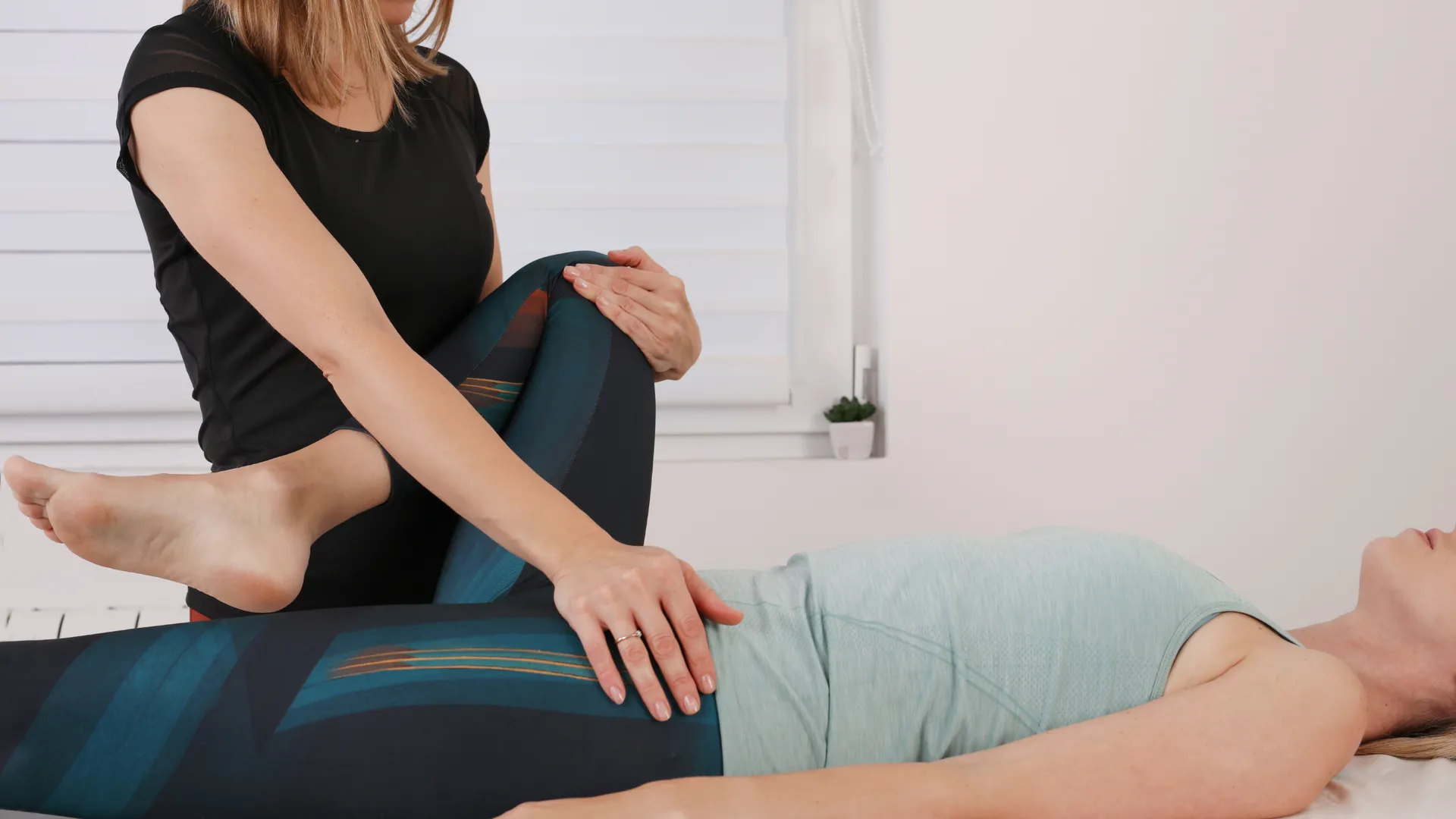
We use gentle, hands-on techniques like myofascial release and connective tissue work to reduce muscle tension and improve how your tissues move.
We also use approaches that support your nervous system, helping your body feel safer and less reactive to pain.
This matters because chronic pain isn’t just physical. It’s neurological too.[6]
2. Restoring pelvic floor function
Your pelvic floor needs to do more than just “strengthen.”
It needs to contract, relax, and coordinate properly.
With endometriosis, these muscles often become too tight or uncoordinated. That can contribute to:[6,7]
- Pain with intercourse
- Bladder and bowel symptoms
- Ongoing pelvic discomfort
We help your muscles relearn how to move in a way that supports your body, not fights against it.
And often, that means focusing on lengthening and coordination, not just strengthening.[7]
3. Supporting recovery after surgery
If you’ve had surgery (or are planning to), scar tissue and adhesions can affect how your body moves and feels.
Pelvic physio can help with:
- Scar mobilization
- Improving tissue mobility
- Reducing post-surgical pain
- Supporting your return to movement
This is a key part of long-term recovery that many people don’t realize exists.
Why a team approach matters
Endometriosis isn’t just affecting one system in the body, so it shouldn’t be treated that way.
The most effective care is collaborative and patient-centred, often involving:[5]
- Gynaecologists
- Primary care providers
- Psychotherapists
- Dietitians
- Pelvic floor physiotherapists
This kind of team approach helps address the hormonal, physical, and emotional layers of the condition.
And it helps you feel supported, not passed around.
A gentle reminder
If you’ve been living with this for a while, you might have learned to normalize it.
To push through. To downplay it. To tell yourself it’s “not that bad.”
But your pain matters. Your experience matters.
And support exists that can help you feel more comfortable, more connected, and more in control of your body again.
You don’t have to do this alone
Pelvic floor physiotherapy is an evidence-based, individualized approach that helps manage pain, restore function, and improve quality of life for people living with endometriosis.[6,7]
And more importantly, it’s care that meets you where you are.
If you’re ready to explore support, we’re here.
And we’ll walk through it with you step by step.
References
- Zondervan KT, Becker CM, Missmer SA. Endometriosis. N Engl J Med. 2020;382(13):1244-1256. doi:10.1056/NEJMra1810764
- World Health Organization. Endometriosis. Fact sheet. Accessed September 25, 2026. https://www.who.int/news-room/fact-sheets/detail/endometriosis
- Nnoaham KE, Hummelshoj L, Webster P, et al. Impact of endometriosis on quality of life and work productivity: a multicenter study across ten countries. Fertil Steril. 2011;96(2):366-373.e8. doi:10.1016/j.fertnstert.2011.05.090
- Singh S, Soliman AM, Rahal Y, et al. Prevalence, symptomatic burden, and diagnosis of endometriosis in Canada: cross-sectional survey of 30 000 women. J Obstet Gynaecol Can. 2020;42(7):829-838. doi:10.1016/j.jogc.2019.10.022
- Becker CM, Bokor A, Heikinheimo O, et al. ESHRE guideline: endometriosis. Hum Reprod Open. 2022;2022(2):hoac009. doi:10.1093/hropen/hoac009
- Aredo JV, Heyrana KJ, Karp BI, Shah JP, Stratton P. Relating chronic pelvic pain and endometriosis to signs of sensitization and myofascial pain and dysfunction. Semin Reprod Med. 2017;35(1):88-97. doi:10.1055/s-0036-1597123
- Del Forno S, Arena A, Pellizzone V, et al. Assessment of levator hiatal area using 3D/4D transperineal ultrasound in women with deep infiltrating endometriosis and superficial dyspareunia treated with pelvic floor muscle physiotherapy: randomized controlled trial. Ultrasound Obstet Gynecol. 2021;57(5):726-732. doi:10.1002/uog.23590