
Originally published on June 20, 2022 by Vital Physiotherapy & Wellness, now part of the Bravella Health network. Original author: Vital Physiotherapy and Wellness Team.
It’s World Continence Week!
In honour of World Continence Week, we’re starting the conversation about leaking.
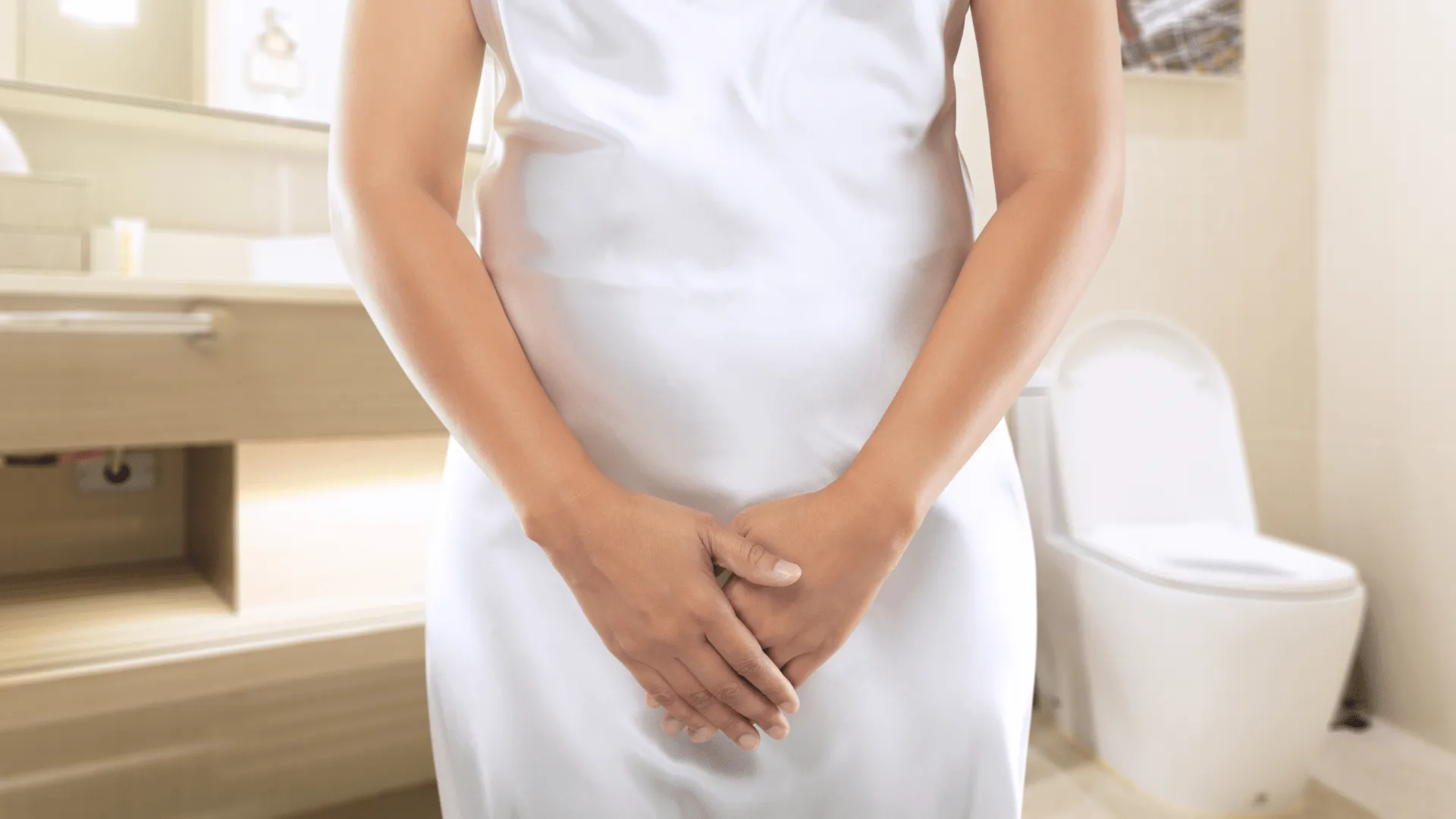
As pelvic floor physiotherapists, one of the most common symptom clients tell us about is urinary leaking, also known as urinary incontinence. There are a number of different types of incontinence. Some clients experience leaking with a sneeze, cough or laugh, while jumping on the trampoline or even standing up after finishing to pee. This kind of leaking is called stress urinary incontinence. Some people experience a strong urge to pee and leak prior to making it to the bathroom or once they arrive in the bathroom but before sitting comfortable on the toilet. This type of leaking is called urge urinary incontinence.[1] Leaking is a very common issue. This includes men of all ages, young ladies who have never had kids, postpartum women.[2] Urinary incontinence is very common, but the good news is that you don’t have to live with it! There is so much we can do to treat it!
Why does leaking happen?
When the pelvic floor muscles are functioning as part of a well coordinated and efficient muscular system, they provide closure around the urethra and keep us continent when we are going about our activities.[3] Leaking is a sign that the pelvic floor muscles aren’t doing their job optimally. This can be due to the muscles being overactive (working to long and hard without a break) or under-active (unable to work hard or strong enough).[4] As pelvic floor physiotherapists, it is our job to figure out the nature of the muscle dysfunction. In either scenario- treatment involves rehabilitating the pelvic floor and surrounding core muscles by ensuring they are at their optimal length and then re-educating them to function as part of an efficient and well-coordinated pelvic floor and core system.
Pelvic floor physiotherapy can help you manage any incontinence you may be experiencing.[5,6]
In the meantime, if you are experiencing leaking as you go about your day some important things to ask yourself include:
Am I adequately hydrated? This will vary from person to person and depend on your overall diet but a good general rule is eight 8 oz cups per day or the 8×8 rule, easy to remember. Turns out that adequate hydration is super important in treating incontinence.[6]
Am I regular with my bowels? This means going regularly but also, ensuring that you pass bowel movements with ease so that they do not require you to strain and leave you feeling completely emptied. Straining on the toilet to have a bowel movement, even a little bit, can prevent the pelvic floor muscles from functioning properly. If you are straining, assess your diet for adequate fiber, hydration levels and positioning on the toilet. Ideal position on the toilet is feet elevated on a stool. This allows the pelvic floor muscles to relax and the rectum to empty fully and easily.[7]
Take note of the following: When do you leak? Does it happen throughout the day? Later in the day? Which activities cause you to leak? Take notes! This information will shed light on when your pelvic floor muscles are not coping well. Take this info to your physiotherapist, it’s valuable.[6]
Lastly, know that urinary incontinence is NOT a symptom you have to live with. Don’t just assume that it’s a common part of pregnancy, aging etc… you CAN have your life back and live in a world with no leaking.
Want to know more? Contact us with your questions! We would love to continue the conversation!
References
- Haylen BT, de Ridder D, Freeman RM, et al. An International Urogynecological Association (IUGA)/International Continence Society (ICS) joint report on the terminology for female pelvic floor dysfunction. Neurourol Urodyn. 2010;29(1):4-20. doi:10.1002/nau.20798
- Kolahdooz F, Jang SL, Lawrence S, et al. Prevalence and impact of urinary incontinence in Canada: a systematic review of the quantitative and qualitative literature and a meta-analysis of quantitative data. AJE Advances: Research in Epidemiology. 2026;2(1):uuag006. doi:10.1093/ajeadv/uuag006
- Miller JM, Ashton-Miller JA, DeLancey JOL. A pelvic muscle precontraction can reduce cough-related urine loss in selected women with mild SUI. J Am Geriatr Soc. 1998;46(7):870-874. doi:10.1111/j.1532-5415.1998.tb02721.x
- Frawley H, Shelly B, Morin M, et al. An International Continence Society (ICS) report on the terminology for pelvic floor muscle assessment. Neurourol Urodyn. 2021;40(5):1217-1260. doi:10.1002/nau.24658
- Dumoulin C, Cacciari LP, Hay-Smith EJC. Pelvic floor muscle training versus no treatment, or inactive control treatments, for urinary incontinence in women. Cochrane Database Syst Rev. 2018;10(10):CD005654. doi:10.1002/14651858.CD005654.pub4
- National Institute for Health and Care Excellence. Urinary incontinence and pelvic organ prolapse in women: management. NICE guideline NG123. Published April 2, 2019. Updated June 24, 2019. Accessed September 24, 2026. https://www.nice.org.uk/guidance/ng123
- Sakakibara R, Tsunoyama K, Hosoi H, et al. Influence of body position on defecation in humans. Low Urin Tract Symptoms. 2010;2(1):16-21. doi:10.1111/j.1757-5672.2009.00057.x

Let’s Book Your First Appointment
You can relax knowing that you have options. Instead, you can stop feeling like it is your fault and get ready for a life-changing experience.


