
Originally published on December 9, 2021 by Vital Physiotherapy & Wellness, now part of the Bravella Health network. Original author: Chana Ross.
As a parent, you are used to talking all about your baby’s diapers and poo and pee habits.
Today, I want to talk to you about yours.
As a pelvic floor physiotherapist, one of the most common reasons clients come to see me is because they are leaking urine, also known as urinary incontinence. You know, those little leaks that happen and make you cross your legs when you laugh or feel a sneeze coming along? Or the ones that may sneak up on you every time you get an exercise session in, jump or, heaven forbid, full belly laugh?
You know, that little leak of pee that makes you think, “Thank you child- of-mine”.. the one that your friends minimize and say, “What did you expect after having kids?”, or the famous, “Our babies are so lucky they are cute after doing THIS to us?” Yeah. Those leaks.
What Is Incontinence?
There are a number of different types of incontinence. Some people experience leaking when they sneeze, cough or laugh, while jumping on the trampoline or even standing up after finishing to pee. This kind of leaking is called stress urinary incontinence. Its leaking that happens when the body is stressed or there is additional pressure downward on the pelvic floor muscles.
Some people experience a strong urge to pee, leak prior to making it to the bathroom or once they arrive in the bathroom but before sitting comfortable on the toilet. This type of leaking is called urge urinary incontinence. Others, have a combination of the two (you lucky gals know who you are.)
Leaking is a very common issue, impacting over 3.3 million Canadians1. Urinary incontinence is very common but as my colleagues and I say “Common, but NOT what we should expect as our standard and it is TOTALLY treatable!”
Why does leaking happen?
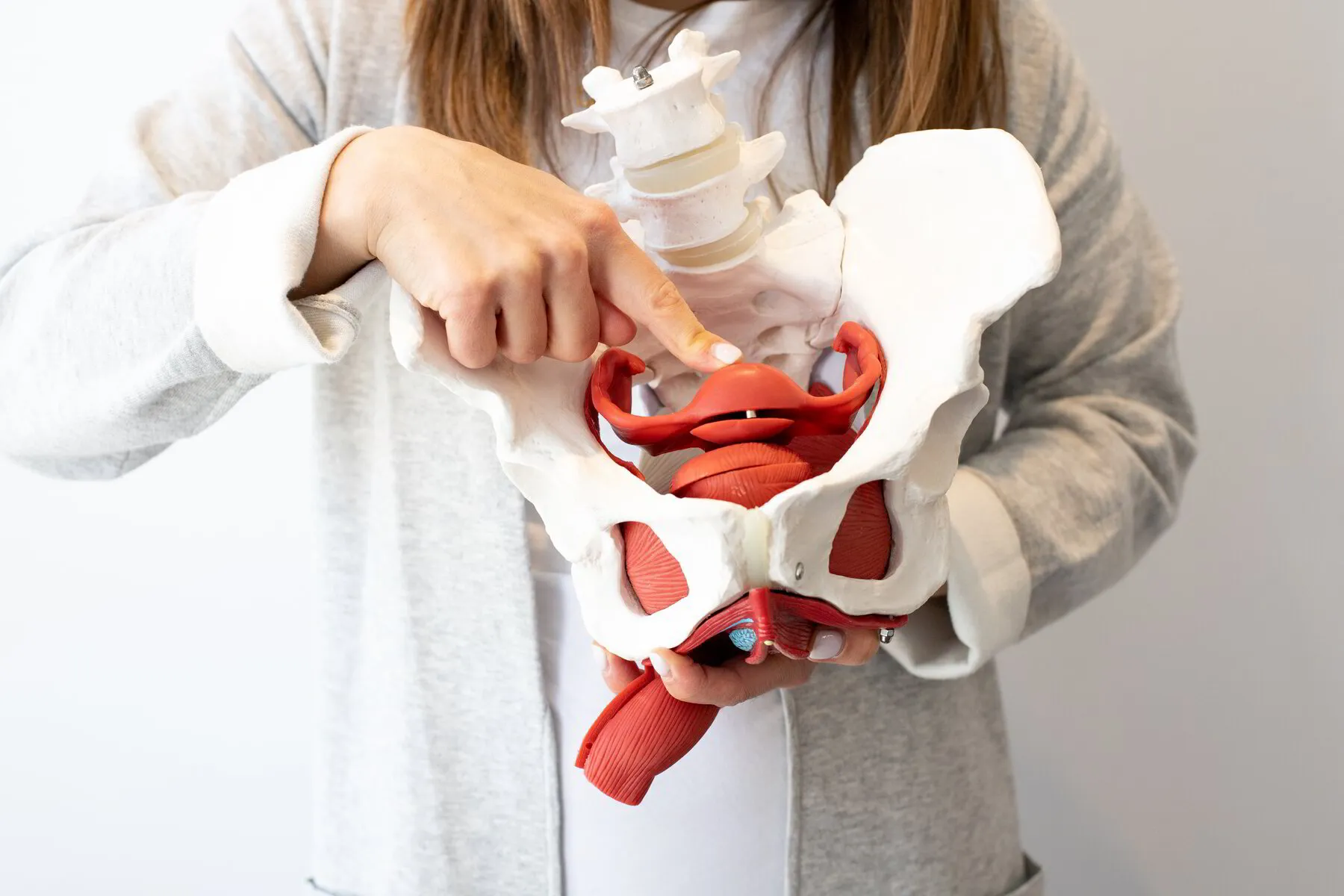
Let’s do a little pelvic floor anatomy lesson:
The pelvic floor (ie. the muscles you are working when you “kegel”) is made up of three layers of muscles that sit at the base of your pelvis. They provide a bowl of support for all of your important internal abdominal and pelvic organs including the bladder, bowel and the uterus. The pelvic floor muscles are integral to bowel, bladder and sexual function and serve as the base of the group of muscles referred to as the “core”.
One of the very important jobs of these muscles is the Maintenance of Continence: The pelvic floor muscles control the opening and closing of the urethra (where your pee comes out of) and rectum (where your poo comes out of), ensuring that stool and urine are held in when you want them to be and released when you are sitting on the toilet and ready to “go”.
Before you sneeze, cough or experience any increase in intra-abdominal pressure (like a jump) your pelvic floor muscles prepare to provide a little extra closure around the urethra to ensure that we stay dry. Leaking is a sign that the pelvic floor muscles aren’t able to do their job effectively. This can be due to the muscles being overactive (working too long and hard without a break) or underactive (unable to work hard or strong enough). It is MY job as a pelvic floor physiotherapist to figure that part out!! In either scenario- treatment involves retraining the pelvic floor and surrounding core muscles by ensuring they are at their optimal length and then re-educating them to function as part of an efficient and well-coordinated pelvic floor and core system. Pelvic floor physiotherapy, including pelvic floor muscle training, has been recommended as first-line conservative management to improve and cure any type of incontinence2.
Before you try to correct your problem with Kegel’s, consider this:
The pelvic floor muscles are muscles like any other. Just doing Kegels is not going to cut it when addressing your leaking.
Here’s why:
1. Many women Kegel (activate their pelvic floor muscles) incorrectly which means that your muscles are NOT getting stronger, and they are therefore not training their muscles to do what they have to do.
2. Many women have pelvic floor muscles which are too tight and overly clenched. If your muscles are clenched all the time, they are not available when you need them to perform. Instead, they need to be trained to relax- NOT to contract! You won’t be able to tell if your pelvic muscles are too tight on your own.
3. The pelvic floor doesn’t work in isolation. No muscle in the body works in isolation, and the pelvic floor muscles are no exception. They are part of your “Anticipatory core” system and they work together with the three other inner core muscles to turn on BEFORE any other muscle starts to move.
So if Kegel’s are not the answer, what should I do after giving birth?
I strongly believe that everyone should get assessed by a physiotherapist postpartum. Not only for leaking but just in general, because some pelvic health conditions are asymptomatic (meaning you have no symptoms), until you do and it is too late. Be proactive about your health. You owe it to yourself!
With pelvic floor physiotherapy, you’ll be trained so that your pelvic floor muscles are ready, available, flexible and coordinated enough to take on whatever it is you want to do, from exercise, to sex to sneezing!
When choosing a physiotherapist, ask your friends who they connected with. Finding someone who you have a good therapeutic relationship with is the most important part of your recovery along with doing your pelvic floor physiotherapy homework of course!
This literally changed my life.
I am positive it will change yours too.
Lastly, know that urinary incontinence is NOT a symptom you have to live with. Don’t just assume that it’s a common part of pregnancy, postpartum or even aging.
You CAN have your life back and live in a world with no leaking. If you have any questions or are unable to reduce your pain with these three tips, consult with a pelvic health physiotherapist, like our fabulous team at Vital Physiotherapy & Wellness or join our mailing list where we talk about all things pelvic and women’s health!
Let’s empower one another to care of our bodies postpartum and not shame ourselves for not “bouncing back.”
You are not broken- you are perfect!
You just need a little support.
We all do.
Sending you love!
Warmly,
Chana
PS. Come follow Vital @vitalphysiotherapyandwellness and me @Chanarosspt on IG
References
(1) The Canadian Continence Foundation (2018). What is Urinary Incontinence? [website]. Retrieved from http://www.canadiancontinence.ca/EN/what-is-urinary-incontinence.php
(2) Dumoulin C, Hay-Smith EJC, Mac Habée-Séguin G. Pelvic floor muscle training versus no treatment, or inactive control treatments, for urinary incontinence in women. Cochrane Database of Systematic Reviews 2014, Issue 5. Art. No.: CD005654. DOI:10.1002/14651858.CD005654.pub3.
Let’s Book Your First Appointment
You can relax knowing that you have options. Instead, you can stop feeling like it is your fault and get ready for a life-changing experience.
START YOUR BOOKING


